
A Day at Brooks Falls
From the beach to the bears, with photos.
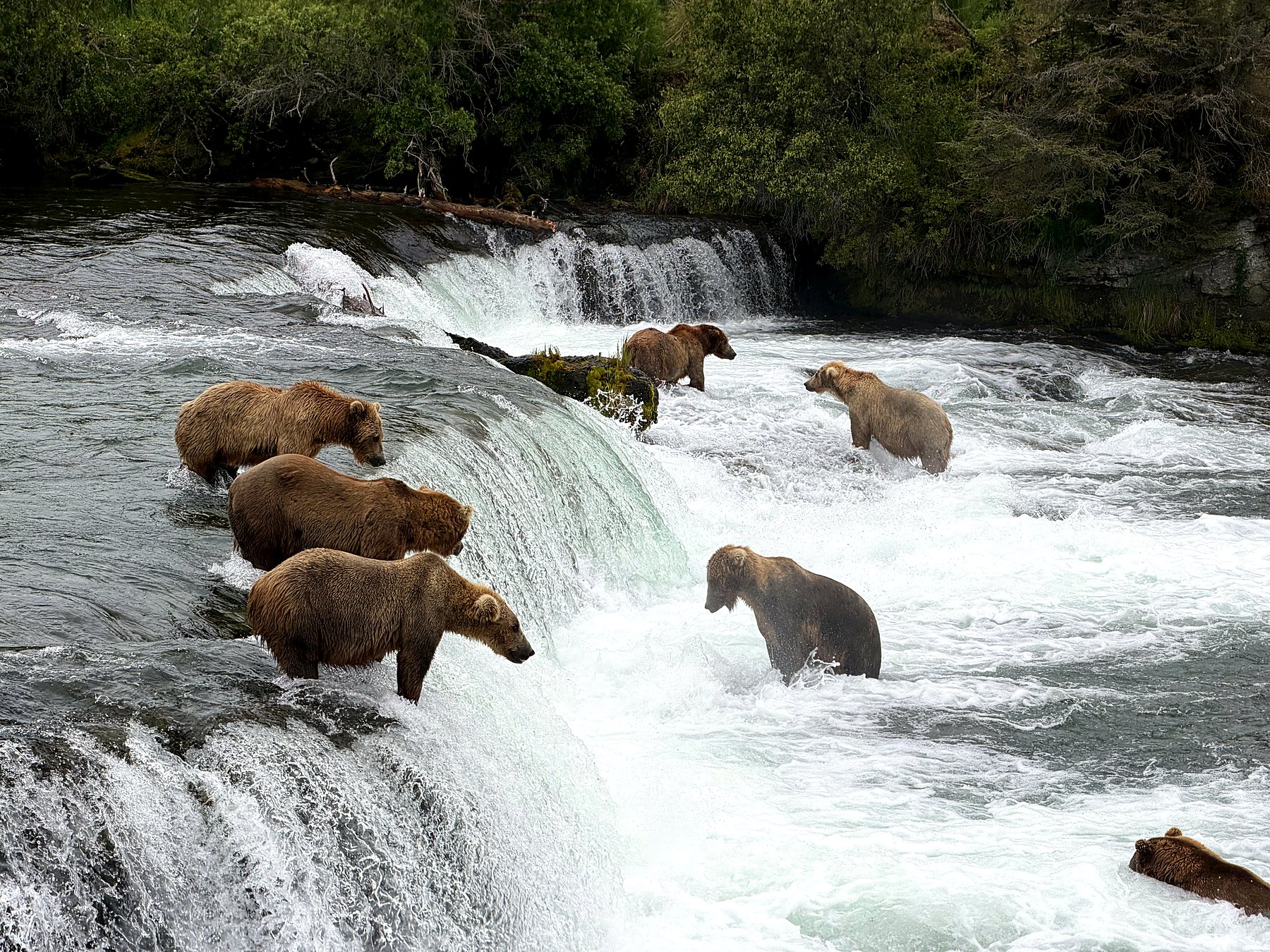
A lot of people picture Brooks Falls as a single photo: a bear at the lip of the falls, a salmon in the air. What that photo leaves out is the walk to get there, and that walk is a big part of the trip. So I took my camera along, from stepping off the plane on the beach to the moment I stepped onto the main platform at Brooks Falls. If you want to see what visiting Brooks Falls actually looks like before you go, this is a good example, step by step.
Landing at Brooks Camp
There are no roads to Brooks Camp. You get there by air or by water, on a floatplane or a water taxi. Most arrivals land on Naknek Lake, right where the Brooks River flows out at Brooks Camp. Floatplanes can also use Brooks Lake at the upper end, though the water taxi cannot get up there. Stay with us at Katmai B&B and we use both the floatplane and the water taxi. Strong winds can sometimes cancel or delay the boat, so we keep both open and take whichever is running.
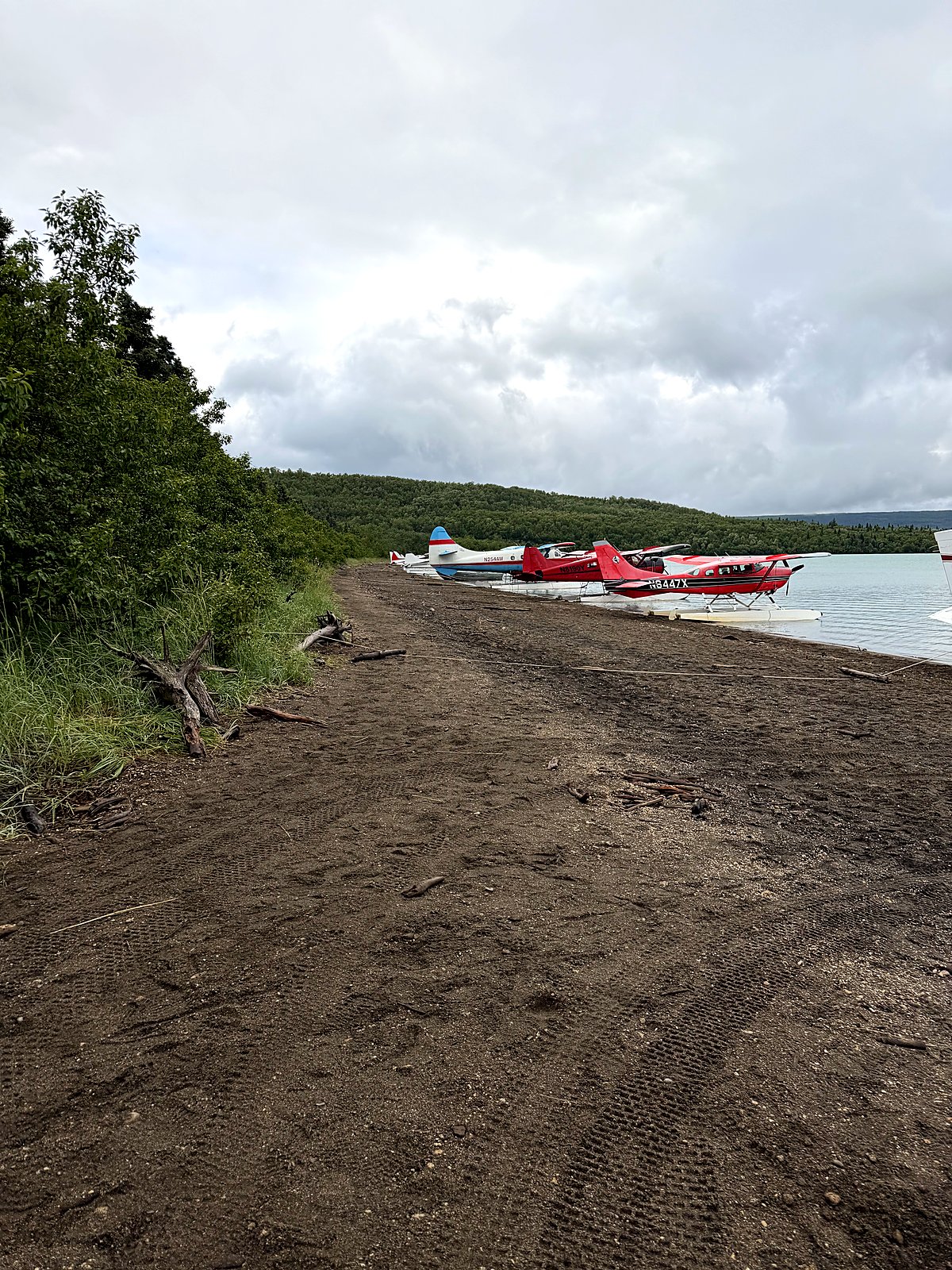
From the beach you walk up a short sandy path into the trees, past the flagpole, and into the small cluster of buildings that make up Brooks Camp. There is a sign that welcomes you in. Take a second here, because the next stop is where every visit begins: bear orientation.
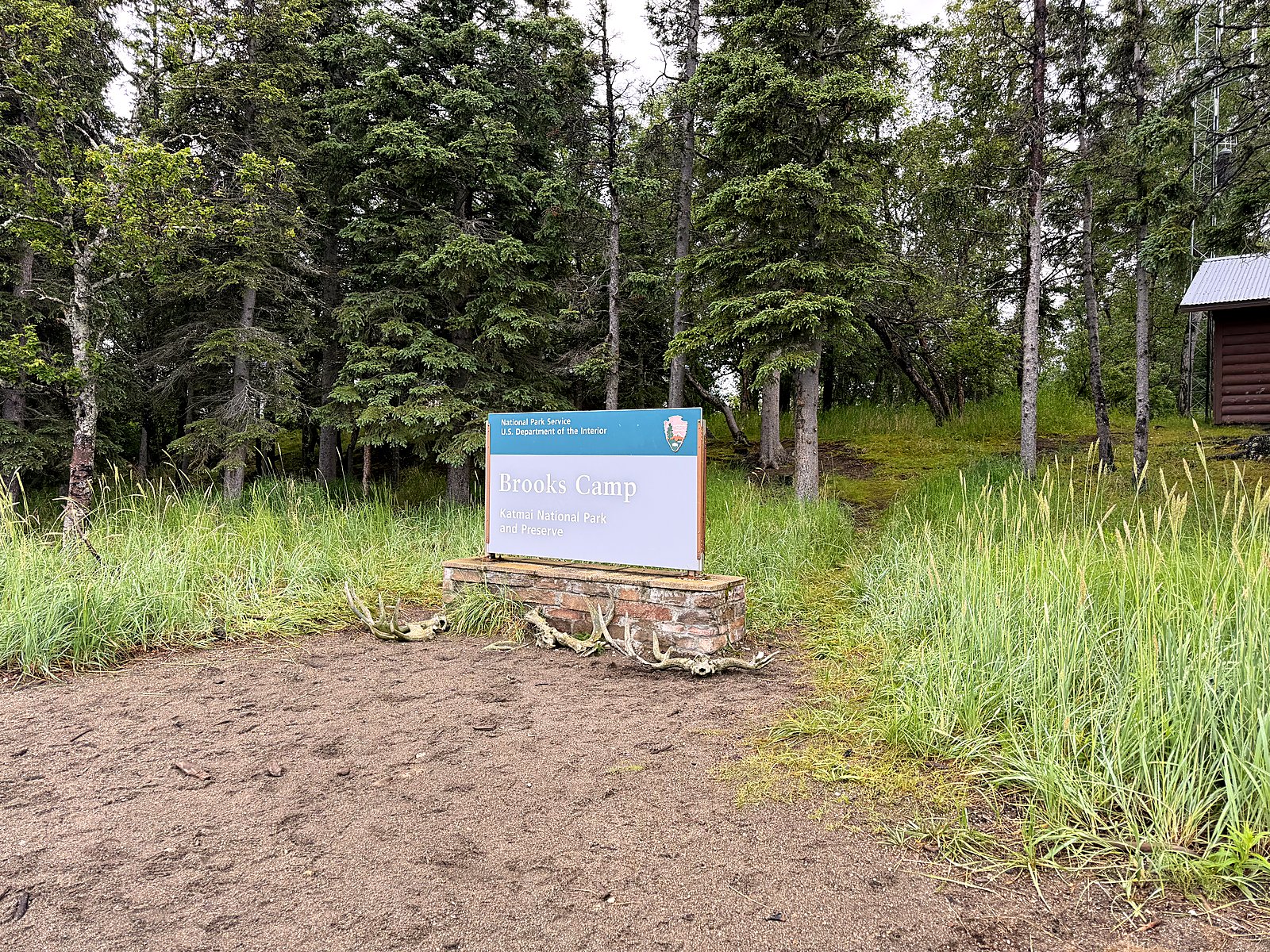
Bear orientation
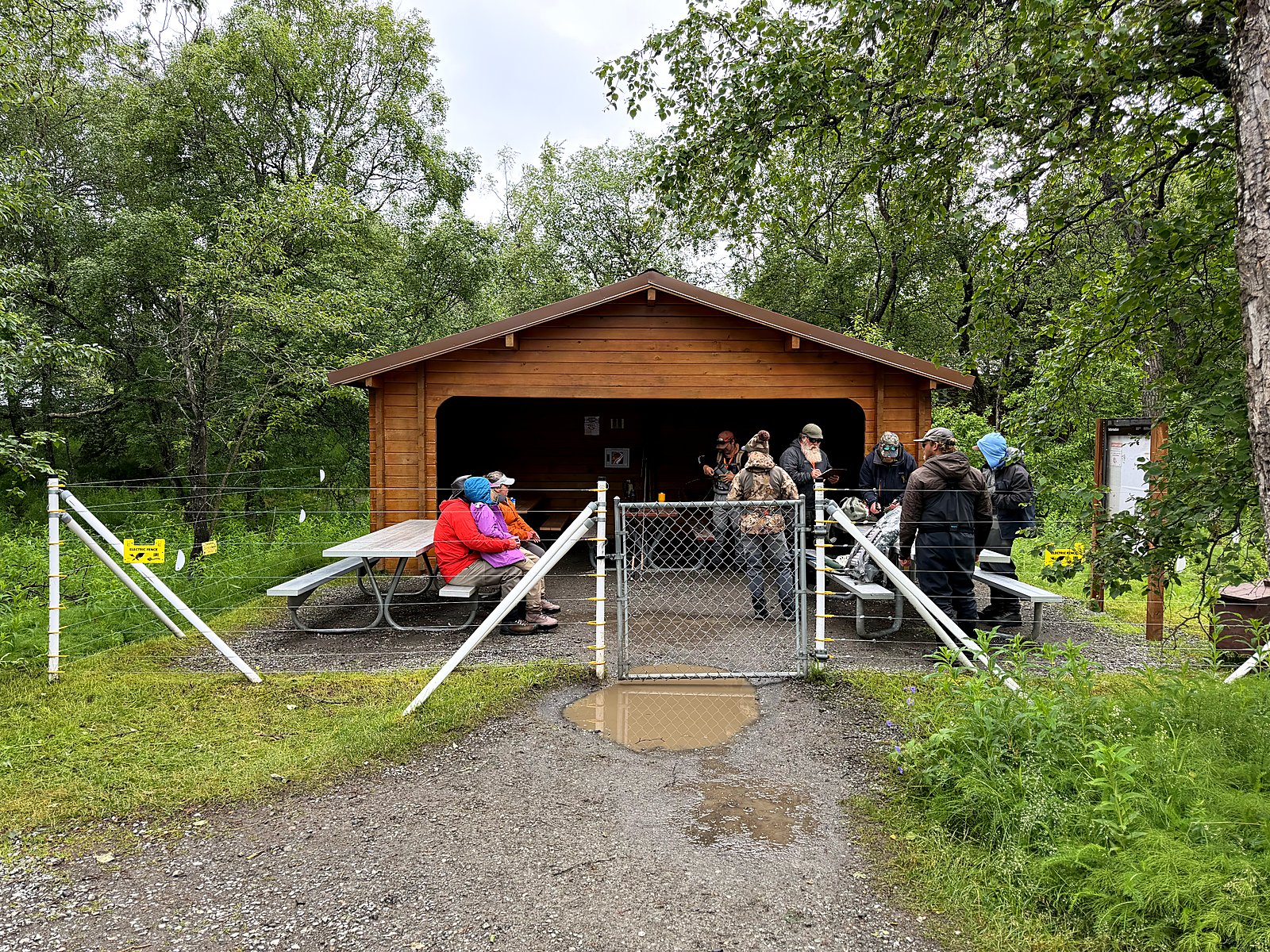
Before you can head anywhere around Brooks Camp, every visitor goes through bear orientation with the National Park Service. It is required on your first visit each year, it happens at the visitor center right after you land, and it takes only a few minutes. A ranger walks you through how to behave around the bears, how far to stay back, what to do if one wanders close, and how the trail and platforms work. It is useful, and it is the reason a place with this many bears and this many people stays as safe as it does.
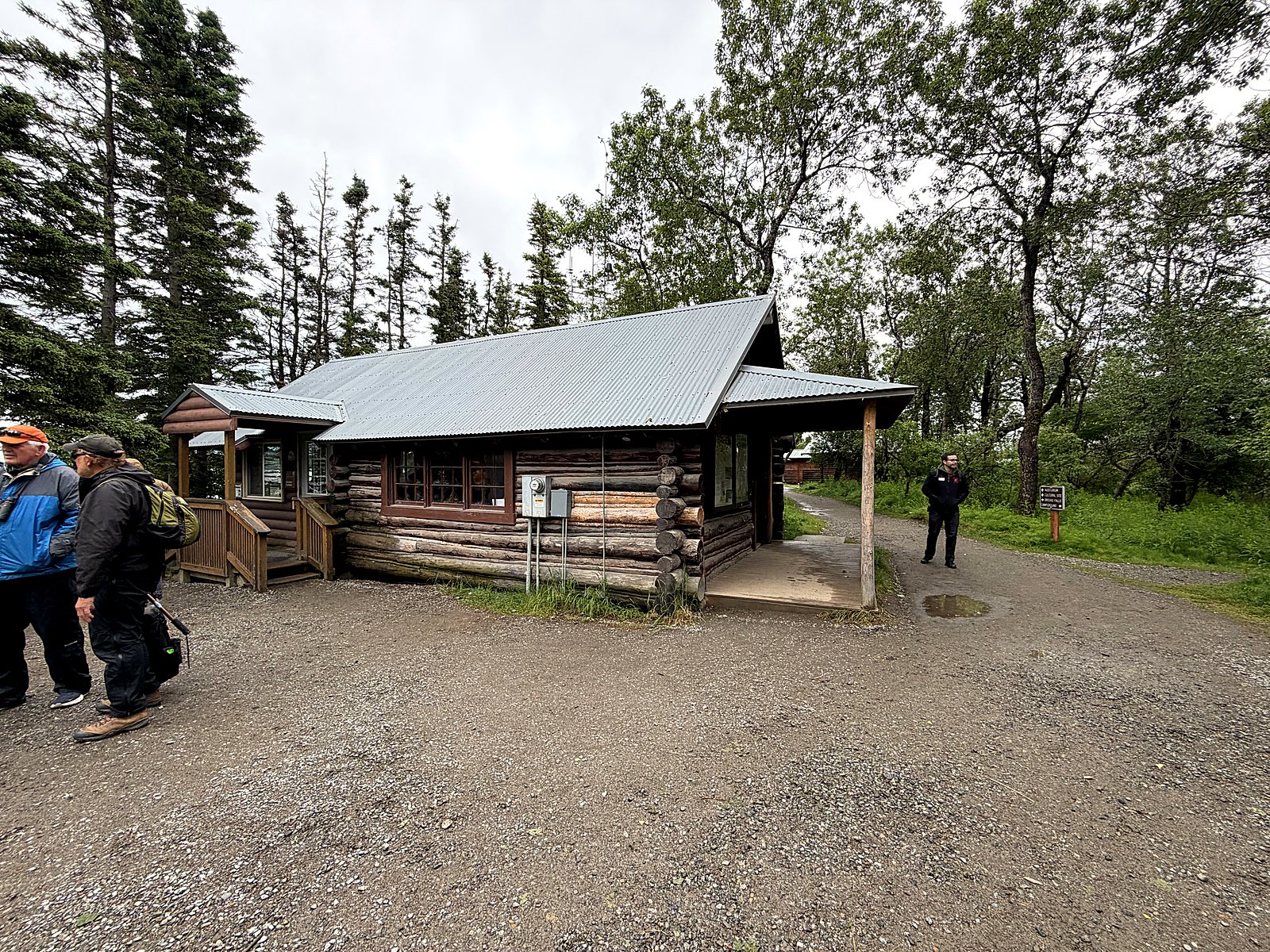
You will also follow the food rules you learn about at orientation, and they matter. There is a food cache and a gear cache for storing anything with a scent, and a picnic area fenced off with an electric fence where eating is allowed. Food does not leave those areas. You may not carry snacks, scented items, or anything but plain water out onto the trail. A bear that learns to associate people with food becomes a dangerous bear, so the rule is strict, and it keeps everyone, bears included, out of trouble.
Across the bridge
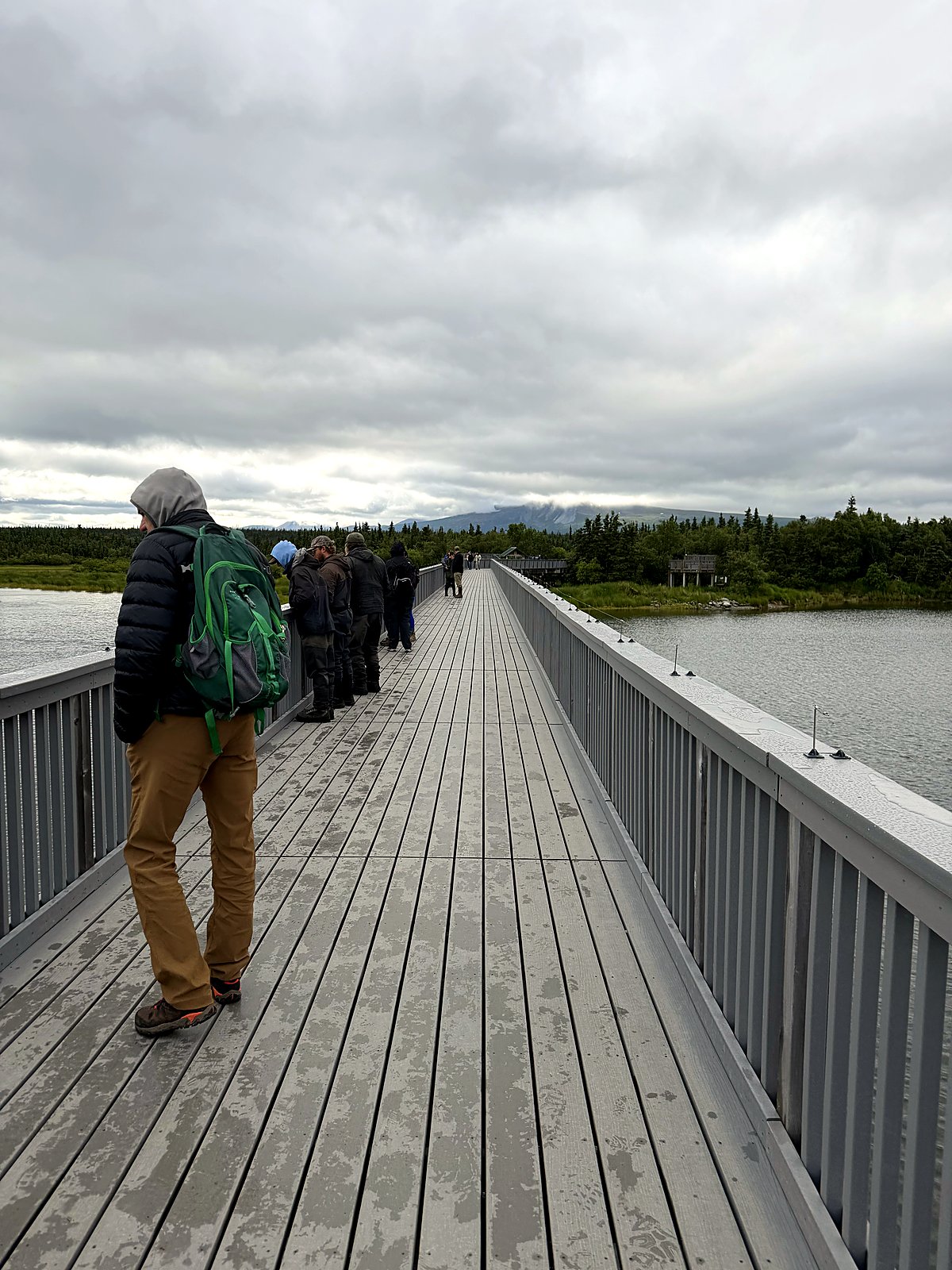
From camp, the walk to the falls crosses the Brooks River on a bridge. It used to be a floating bridge down at water level, and when bears were on or near it, rangers had to hold everyone back, sometimes closing it entirely. Those bear jams were common, since bears like to fish the lower river right there.
The bridge was rebuilt as a raised, elevated bridge to solve exactly that. Now you cross above the bears instead of waiting for them to clear, the view is better, and people and bears stay more separated.
The trail to the falls
Once you are across, it is a straightforward walk. It is about 1.2 miles from the ranger station to the main platform, and roughly a mile and a half all the way from the beach. The path is mostly flat, part gravel road and part raised boardwalk winding through the birch, and most people cover it in around half an hour at an easy pace. There is no scramble and no climb. If you can manage a gentle half-hour walk, you can reach Brooks Falls.
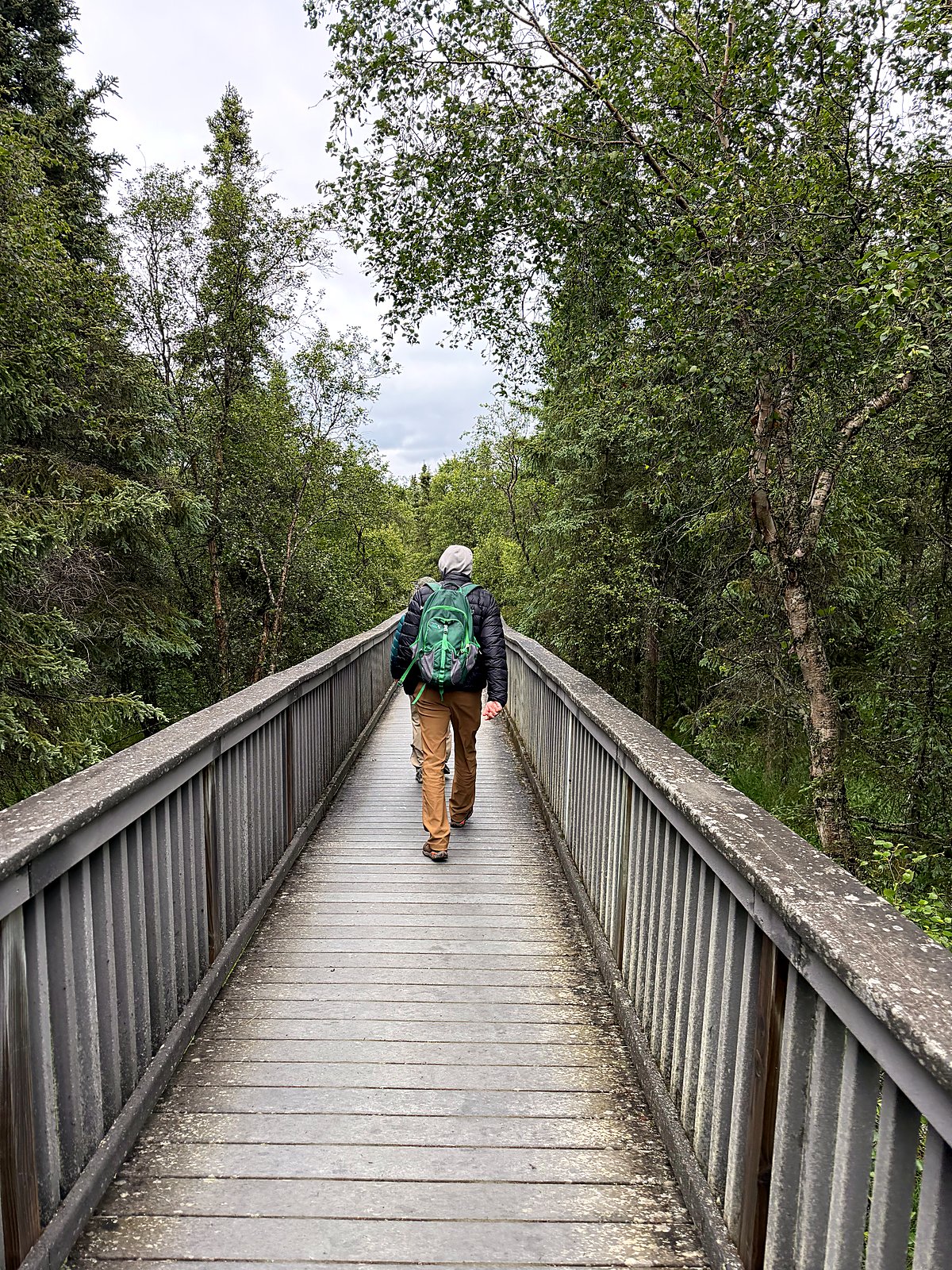
Take your time on this stretch. It is quiet and pretty, and it is also where a lot of the unscripted wildlife happens, away from the crowd at the falls.
Bears along the way
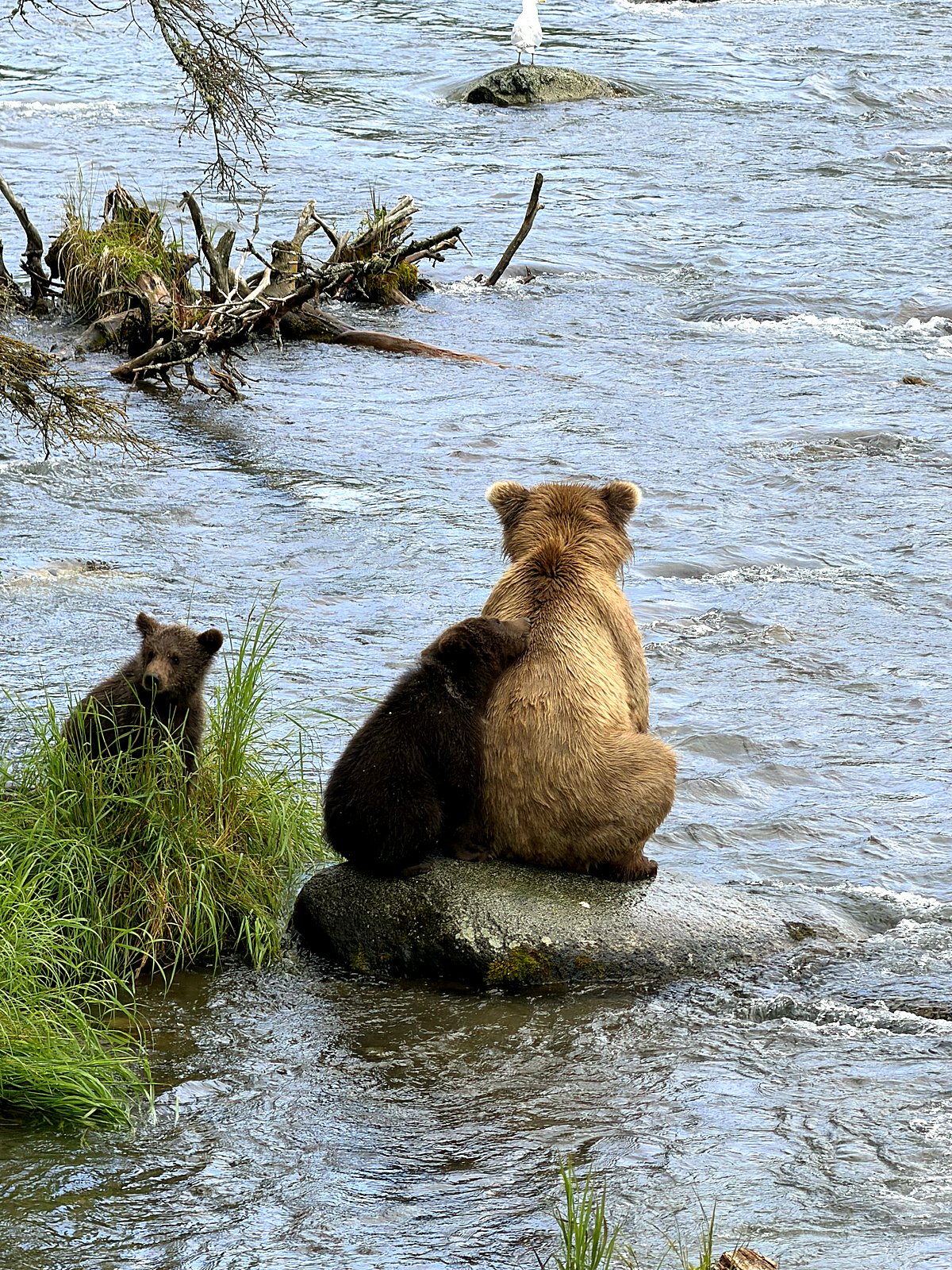
Here is something people do not expect: you often see bears before you ever reach the falls. On this walk a sow sat on a rock out in the river with her cub beside her, watching the water. You are not just marching to a viewpoint, you are moving through the bears' world, and they can turn up anywhere. Keep your distance, keep moving when a ranger asks you to, and give them room. The park asks you to stay well back from any bear, and farther still from a mother with cubs.
The platforms, and the wait
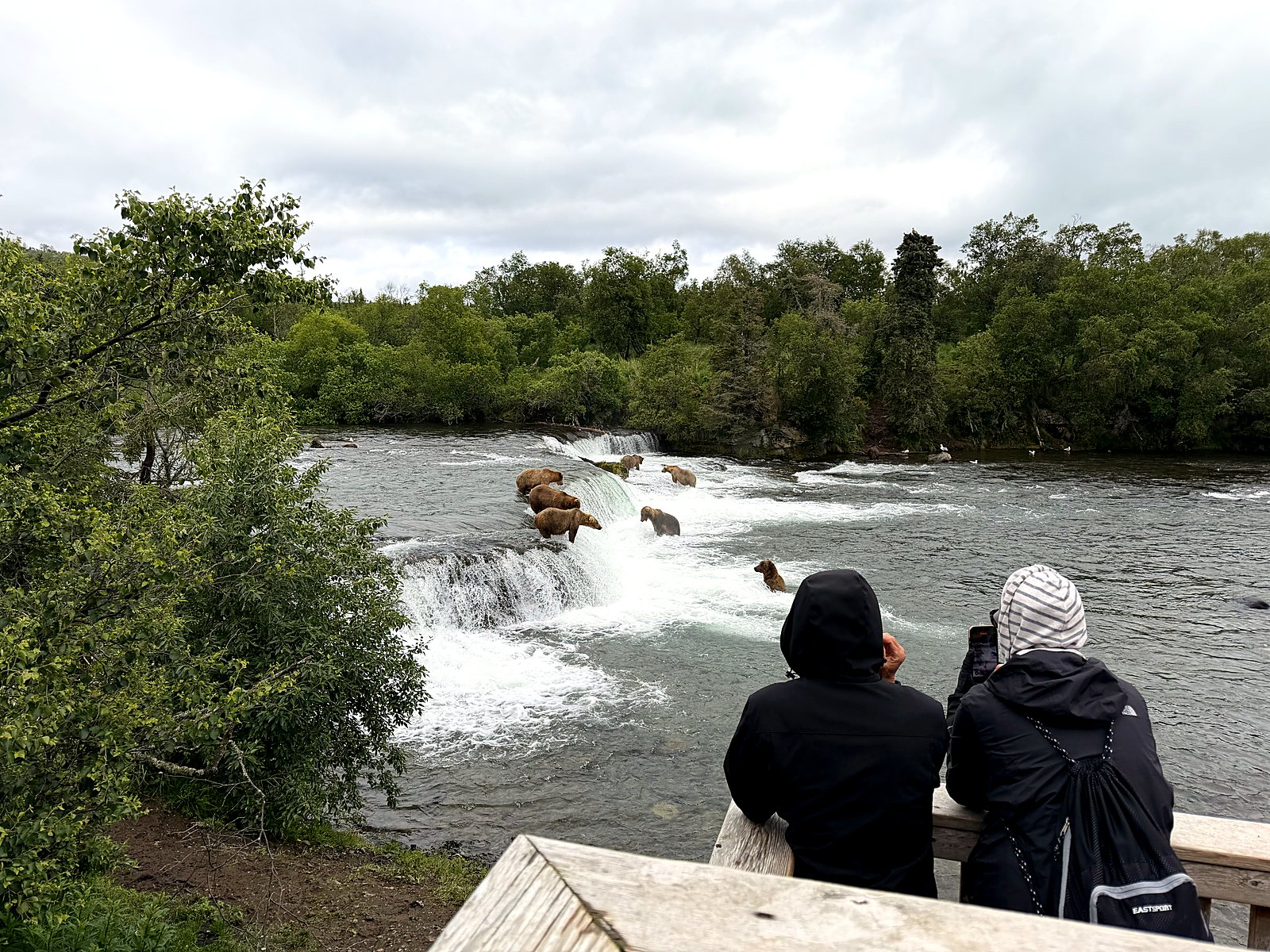
The last stretch is a boardwalk out to the viewing platforms. There are a few of them, a lower river platform, the riffles platform, and the main platform right in front of the waterfall.
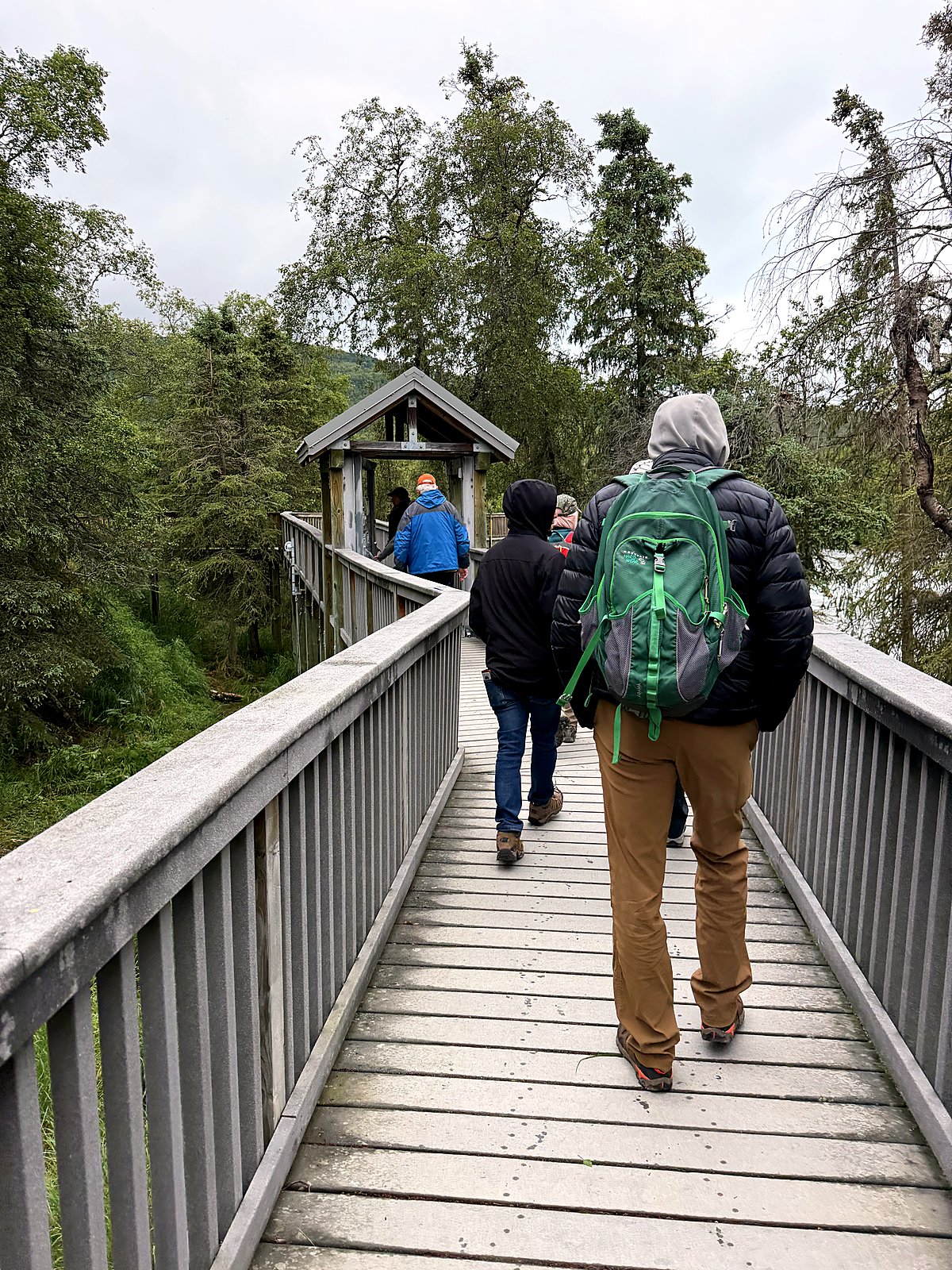
When the main platform is at capacity, the park caps your time on it, usually 30 minutes, so everyone gets a turn. When it is not full, there is no cap and you can stay as long as you like. If there is a wait, you put your name on a list at the tree house, the covered spot where the boardwalk splits toward the main platform one way and the riffles platform the other. You can head back out as many times as your day allows, you just add your name to the list again. In July that wait can be real; in the shoulder seasons there is often little or none.
You do not miss anything while you wait. The riffles platform looks out over the lower river with bears all around it, and you can see the falls from there too. While we waited, this cub was up a tree right off the riffles platform, where its mother had parked it while she fished below.
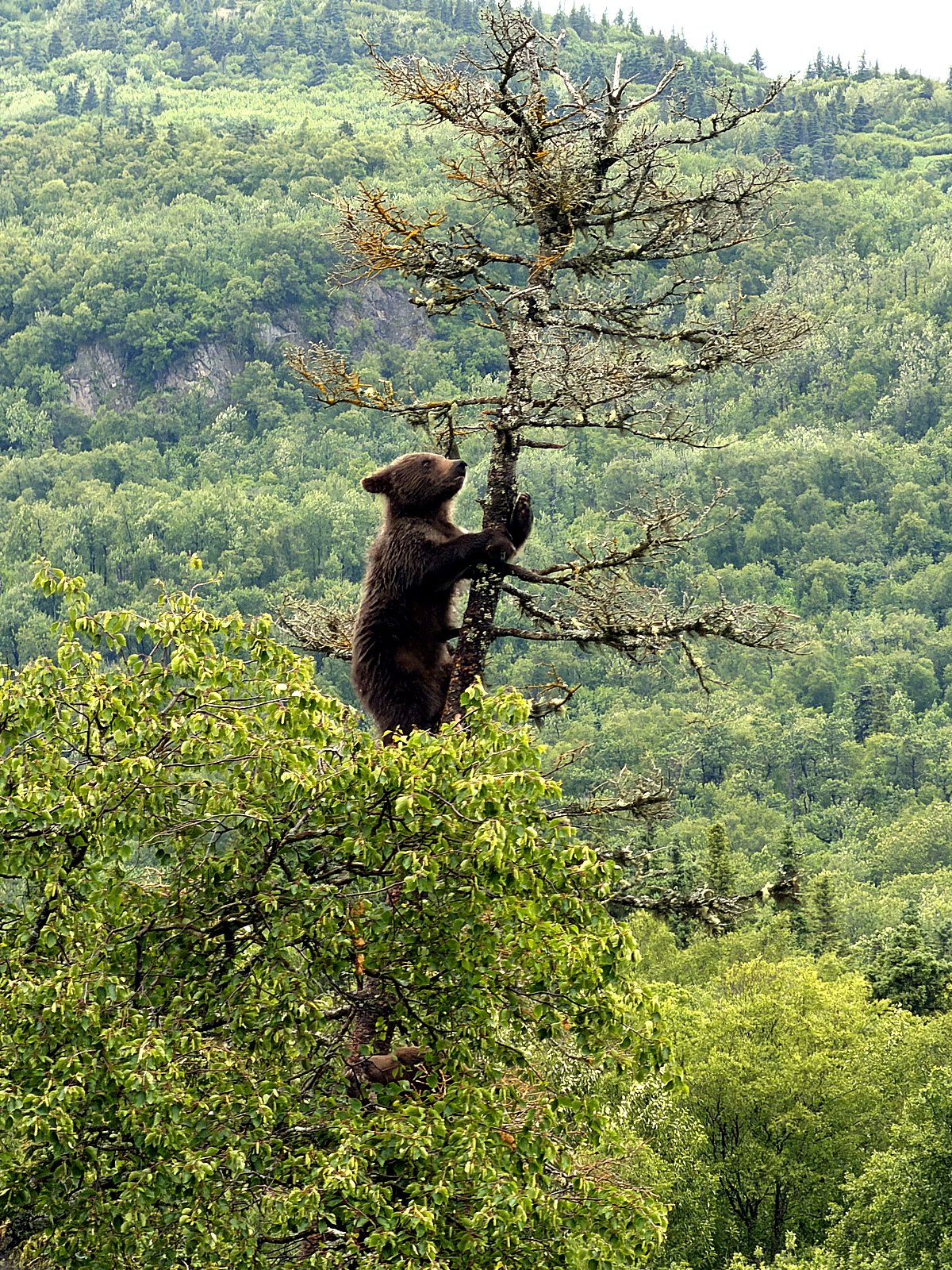
One thing photographers should know: tripods are not allowed on the main platform, so plan to shoot handheld or on a monopod. We cover the camera details in photographing the bears at Brooks Falls. When your turn comes, you come up the ramp, round the last corner, and there it is.
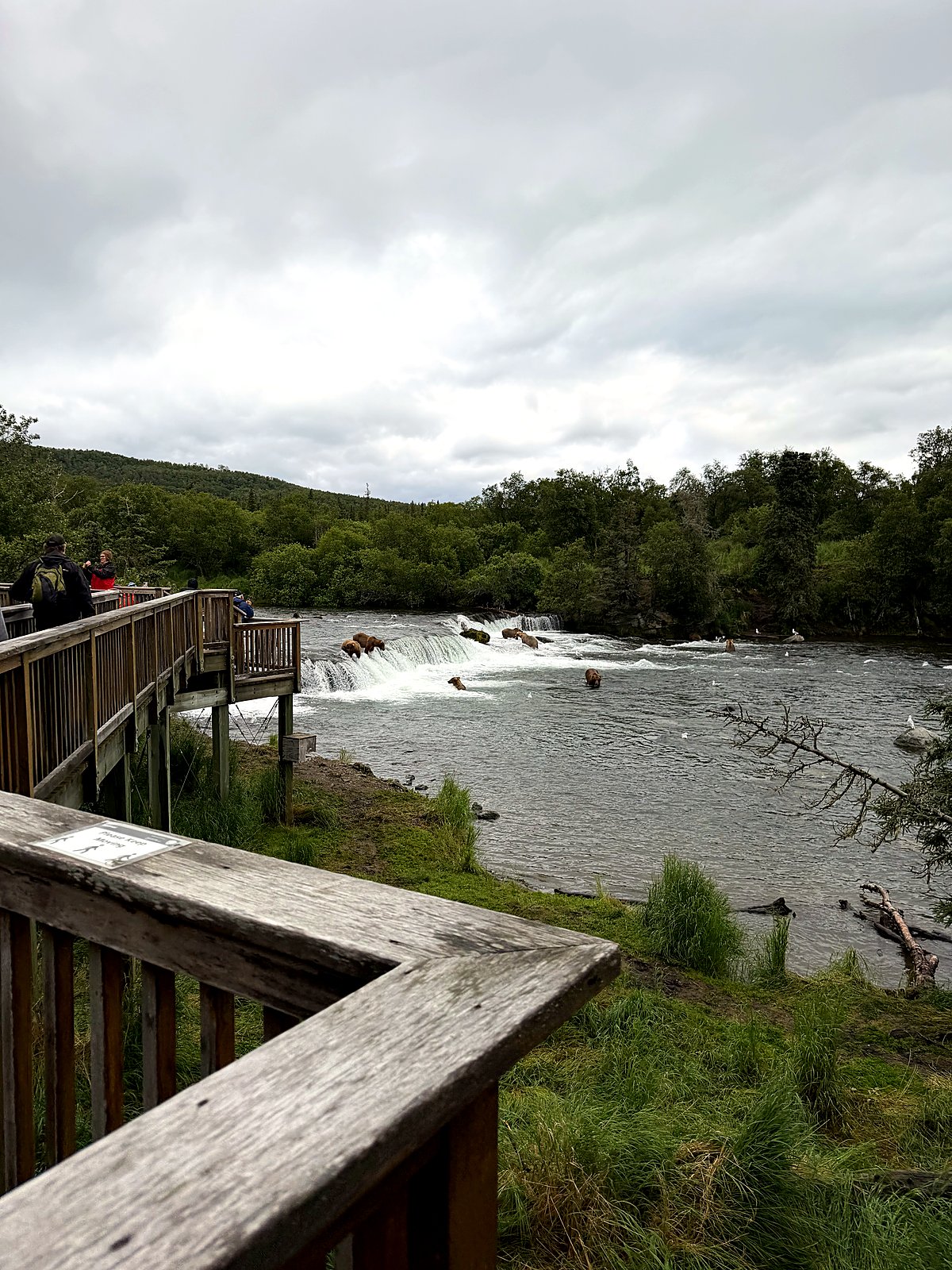
The falls
And this is what you walked for. Bears line up at the lip of the falls, waiting for sockeye to leap straight into range, while others fish the pools below, each with its own technique, some snatching fish out of the air, some diving, some just holding the best rock and refusing to give it up.
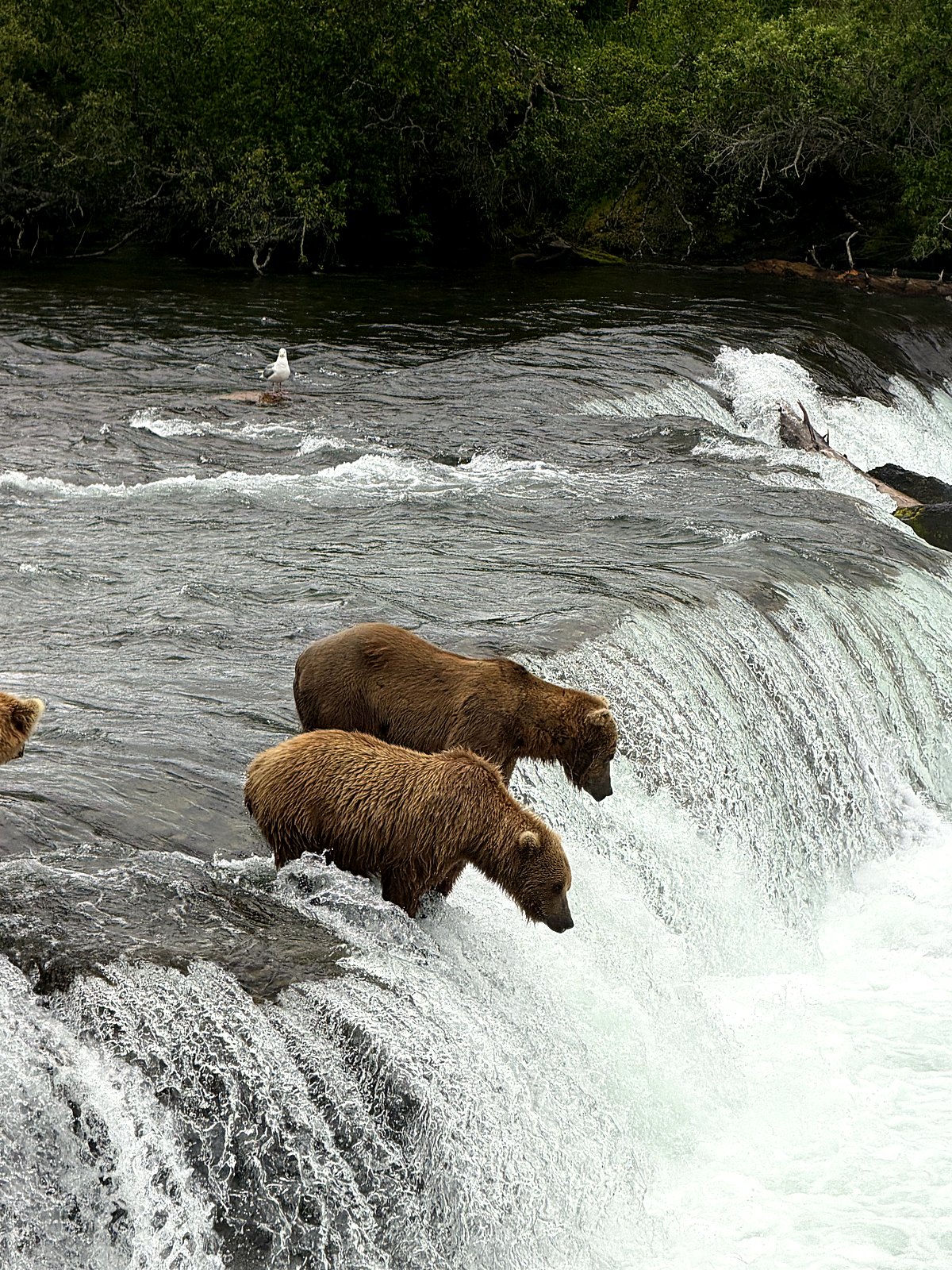
It is loud, it is constant, and photos do not quite prepare you for it. You can stand there for hours and not get bored, which is exactly why giving yourself more than a few minutes here is the whole game.
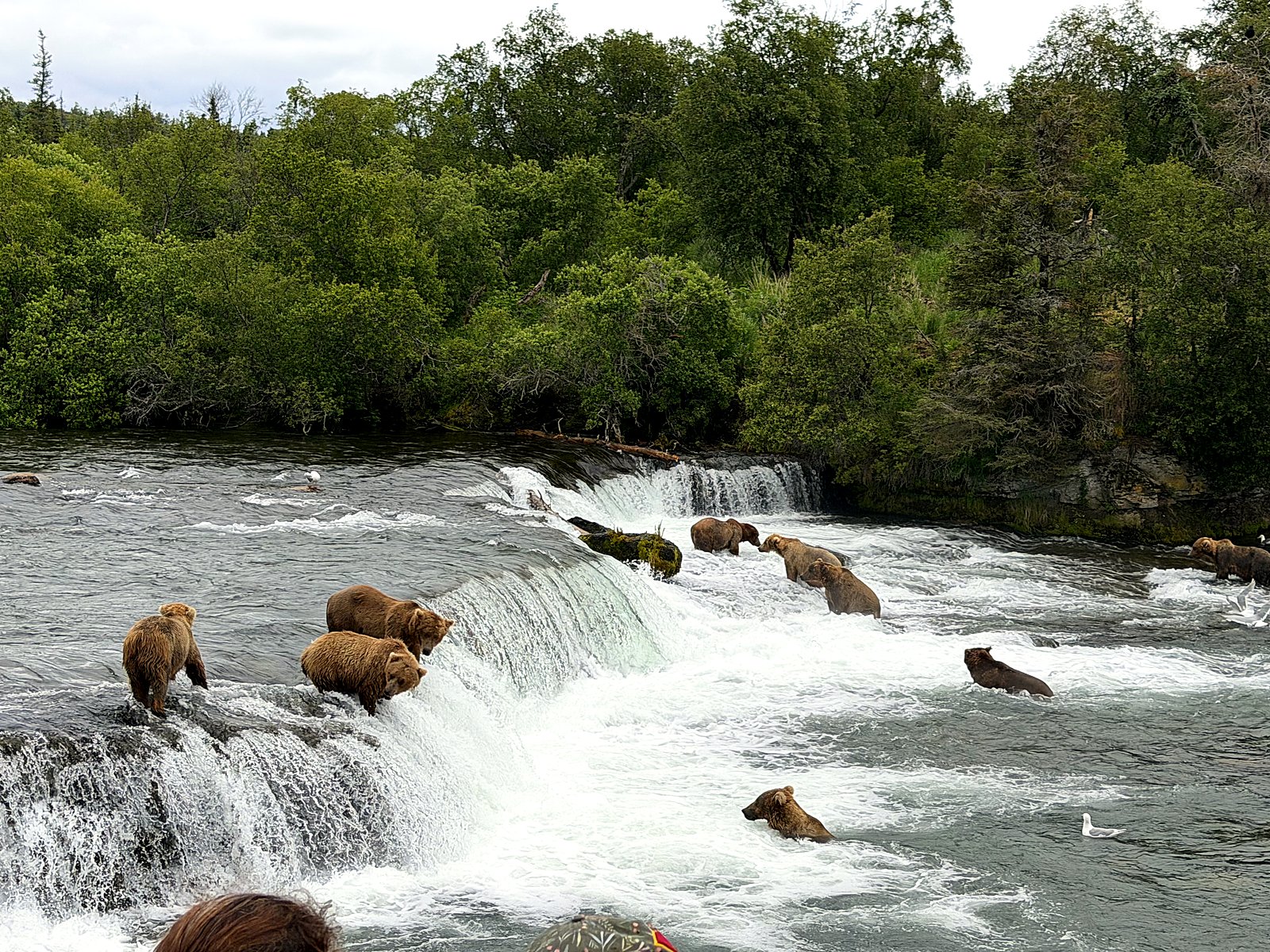
The season runs from roughly late June through the end of September, and there is no bad stretch of it. Late June and July bring the sockeye run and the most bears working the lip of the falls. August stays strong as the fishing keeps up. By September the bears spread all along the river corridor, they are everywhere, and they are the fattest they will be all year. Every part of the season is its own kind of day out there.
How to give yourself the best shot at a great day
If there is one thing I would tell you after making this walk many times, it is this: the biggest difference between a great trip and a frustrating one is not luck, it is time on the ground. Katmai weather can move a day, the trip out can be delayed, and a single day at the falls carries all of that risk on its own. More days at the falls means more chances at good weather, good light, and the falls at their busiest.
That is really the whole case for planning more than a quick in-and-out, and for not carrying the weather risk by yourself. If you would rather have the flights, the timing, and the days at the falls handled so you can just show up and watch bears, that is exactly what we do. Katmai B&B is a small riverfront basecamp in King Salmon built around exactly this trip. Start with the full guide to seeing the bears at Brooks Falls, or the complete guide to King Salmon, and when you are ready we will put together your dates.